This blog has been medically reviewed by Ruth Sharp, RN, BSN, IBCLC, NIDCAP, C-ELBW, NICU, Children’s Minnesota.
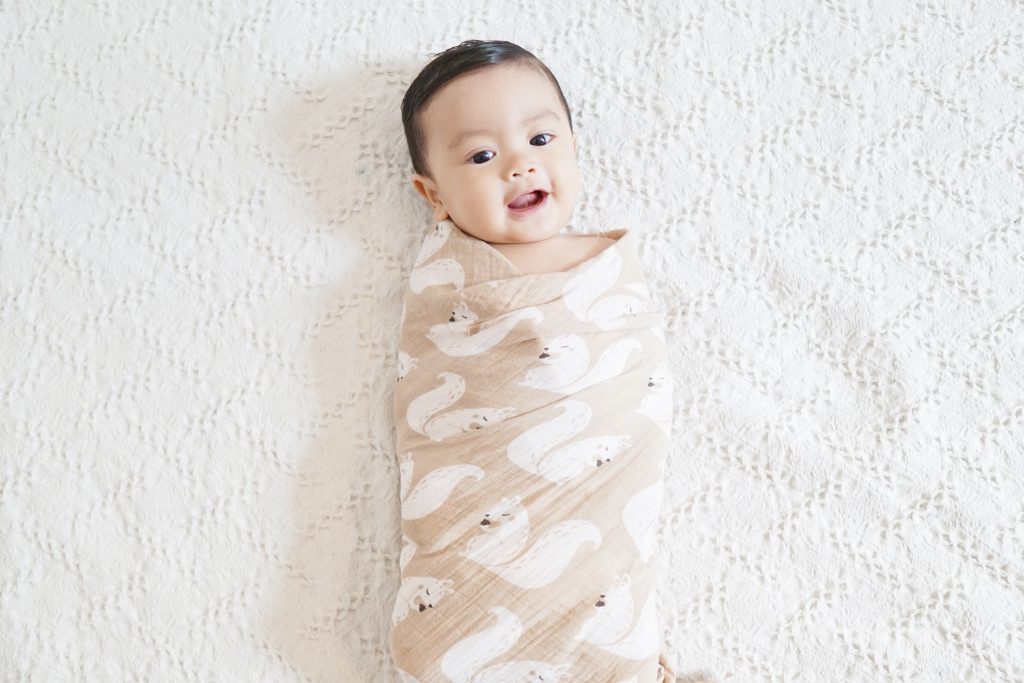
Many things about caring for babies have evolved over the decades, but there’s one tried and true soothing technique all new parents will be grateful to know: how to swaddle a baby. Wrapping your baby up like a burrito can soothe them for hours. Sounds amazing, right?
In this blog, you will learn how to swaddle with a blanket, which is the most common swaddling technique for newborns.
When you know the right way to swaddle a baby, they can feel calm and snug like they’re back in their mother’s womb. Also, babies are born with a startle reflex – called the Moro reflex – so they might jerk suddenly and flail their arms and legs. Keeping newborns swaddled can prevent a startle reflex that could wake them.
Don’t worry if swaddling a wiggly baby seems tricky at first. This blog is going to walk you through one of the ways to swaddle a newborn so your baby will be calm and soothed.
Connect with a trusted provider at The Mother Baby Center to get expert care and support for your birthing journey.
What is swaddling?
Swaddling is a long-used practice of wrapping newborns snuggly with a blanket, including their arms and legs, to mimic how they felt in their mother’s womb. Sometimes people wrap their baby’s arms and hands within the swaddle, and some place the arms midline and hands to their mouth to mimic the womb. Many babies find this calming and comforting, so knowing how to swaddle a newborn is a great skill for new parents to have when they are trying to get their little one to stop crying or sleep.
Here are some benefits of swaddling:
- New babies have very little control over their arms and legs – because of the startle/Moro reflex – so they can easily hit or scratch themselves. Swaddling prevents them from hurting themselves by keeping their limbs securely wrapped inside the blanket. We also recommend gently filing your baby’s nails so they can have their hands and fingers without scratching themselves.
Newborns sleep longer and more soundly when they are swaddled because they aren’t disturbed by their startle reflex. - When you swaddle a newborn for sleep, it encourages back sleeping, which is a key recommendation for reducing the risk of sudden infant death syndrome (SIDS). Plus, learn about the 5 S’s to soothe and comfort your baby.
Is it safe to swaddle a newborn?
When you know the correct way to swaddle a baby, it’s a great option to safely calm them down and help them sleep. However, it’s important to follow the guidance from pediatric experts, including:
- Use the right swaddle blanket. Lightweight, breathable fabrics prevent overheating and offer a soft, snug feel. Avoid heavyweight or large blankets, which can be a suffocation hazard. Swaddle with a muslin or bamboo blanket, and your baby will be calm and cozy.
- Keep the baby’s hips loose. It’s important for healthy hip and leg development to allow the baby’s legs to bend up and out when they are swaddled.
- Lay the baby on their back to sleep. Babies should always sleep on their back, and a swaddled baby should be monitored in case they roll over. This will reduce the risk of SIDS and unintentional suffocation.
- Stop swaddling when the baby can roll over. Some babies show signs of starting to roll over as early as 2 months old, but every baby is different. Some studies have shown an increased risk of SIDS and unintentional suffocation when babies are swaddled if they roll onto their stomach.
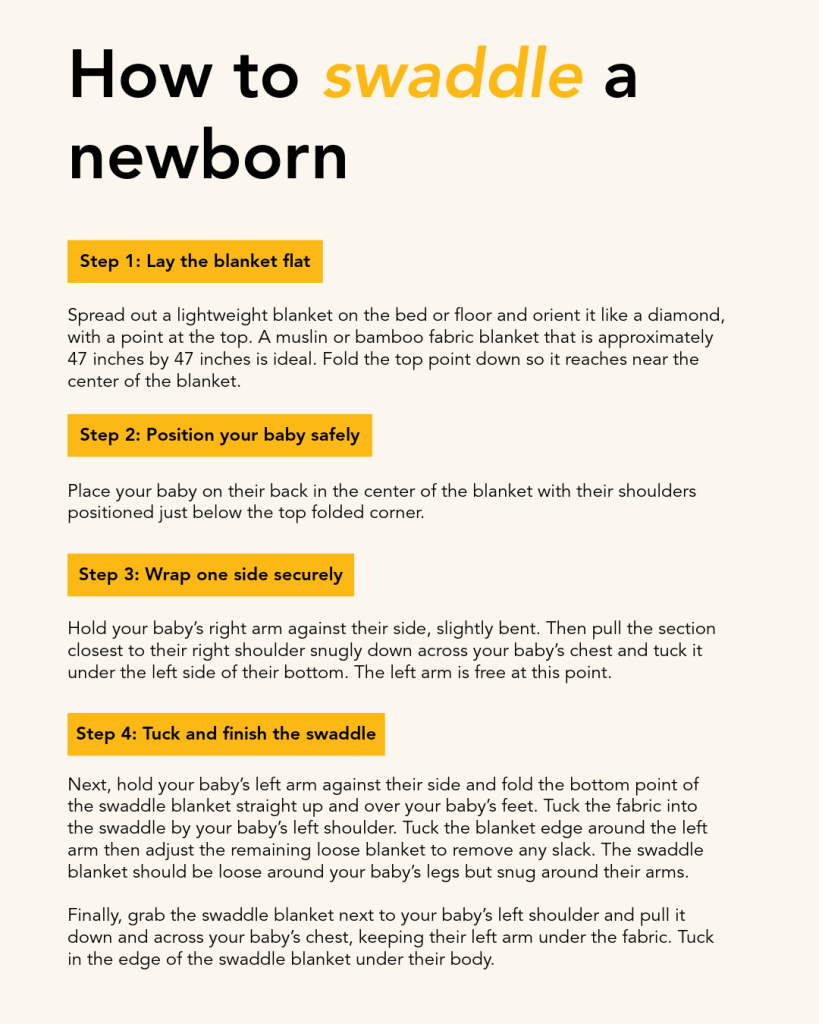
How to swaddle a newborn
You are ready to learn the best way to swaddle a baby! There are many variations of swaddling techniques, but we have an easy four-step approach that will keep your baby safe and comfortable.
Swaddling your newborn can begin on day one – for naps, at nighttime, and anytime your baby is especially fussy. Generally, your baby should be unswaddled during awake time so they can move, stretch and start to take in the world around them. So, try to save swaddling for sleep and comfort.
Step 1: Lay the blanket flat
Spread out a lightweight blanket on the bed or floor and orient it like a diamond, with a point at the top. A muslin or bamboo fabric blanket that is approximately 47 inches by 47 inches is ideal. Fold the top point down so it reaches near the center of the blanket.
Step 2: Position your baby safely
Place your baby on their back in the center of the blanket with their shoulders positioned just below the top folded corner.
Babies who sleep on their backs are much less likely to experience a SIDS-related event than babies who sleep on their stomachs or sides, according to the American Academy of Pediatrics.
Step 3: Wrap one side securely
Hold your baby’s right arm against their side, slightly bent. Then pull the section closest to their right shoulder snugly down across your baby’s chest and tuck it under the left side of their bottom. The left arm is free at this point.
Remember, you want to keep the blanket loose around your baby’s hips and legs to avoid problems with their hips, including dislocation or hip dysplasia.
Step 4: Tuck and finish the swaddle
Next, hold your baby’s left arm against their side and fold the bottom point of the swaddle blanket straight up and over your baby’s feet. Tuck the fabric into the swaddle by your baby’s left shoulder. Tuck the blanket edge around the left arm, then adjust the remaining loose blanket to remove any slack. The swaddle blanket should be loose around your baby’s legs but snug around their arms.
Finally, grab the swaddle blanket next to your baby’s left shoulder and pull it down and across your baby’s chest, keeping their left arm under the fabric. Tuck in the edge of the swaddle blanket under their body.
Last reminder: Check to make sure your baby’s arms are snug. But the blanket shouldn’t be too tight around the chest, legs or hips.
As you and your baby adjust in the early weeks, learn what to expect during the fourth trimester and how The Mother Baby Center can support your journey.
What is a common swaddling mistake?
There are so many things for new parents to learn with a newborn, so don’t worry if you’re having trouble with swaddling techniques. You are definitely not alone!
Here are some tips for the most common swaddling mistakes:
- Swaddle blanket is the wrong size. If the blanket is too big or too small, swaddling will not work. Swaddle blankets come in a variety of lightweight materials and sizes ranging between 40-50 inches square. A muslin or bamboo fabric blanket that is approximately 47 inches by 47 inches is ideal.
- Baby is wrapped too tight. It’s very important to make sure the swaddle isn’t restricting the baby’s breathing, as well as their movements. If the swaddle is too tight around their legs and hips, this can lead to development problems.
- Baby is swaddled too high on the chest. This can increase the risk of overheating and, in some cases, suffocation. Make sure the swaddle blanket is secured around their midsection so it can’t interfere with their neck and upper chest.
- When your baby can roll over, it’s time to stop swaddling. Typically, babies show signs of starting to roll to their side around 2 months, but every baby is different. It’s important to monitor your baby when they are sleeping while swaddled because of the increased risk of suffocation and SIDS when babies are on their tummies while sleeping.
Find a trusted provider at The Mother Baby Center
Maybe you remember the first perfectly wrapped swaddle blanket placed around your beautiful new baby by your labor and delivery team. They are the true experts of swaddling techniques for newborns. But like them, soon you will also become a swaddling expert.
Many new parents say swaddling a crying, flailing baby feels wrong, like you’re forcing them into a tight grip against their will. But remember, for hundreds of years, baby caregivers and pediatric experts have been teaching new parents how to swaddle a newborn so they could also experience some calm and peaceful nights while their baby was safe and comfortable.
If your baby hasn’t arrived yet, you could practice swaddling a doll. If your baby is here, practice when they’re already calm or sleeping. Just be easy on yourself. And remember: We’re here to help – our patient families are supported with a broad range of postpartum care options at The Mother Baby Center.