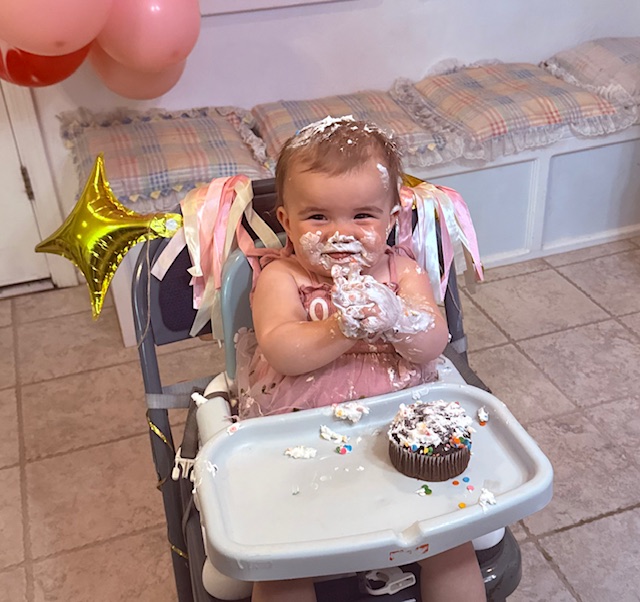
When Heidi found out she was pregnant with her third child, Lucy, she was overjoyed. Heidi and her husband Cameron, who live in Duluth, Minnesota, were thrilled to welcome their “missing puzzle piece” into their family. However, their excitement turned to concern when, at the 20-week anatomy scan, the doctors noticed something unusual about Lucy’s heart.
Signs of congenital heart defects
During the scan at Aspirus St. Luke’s, the team couldn’t get clear images of Lucy’s heart. Heidi’s OB-GYN, Taylor Swanson, MD, noticed a difference between the left and right ventricles and referred her to Essentia Health for a fetal echocardiogram, or echo.
Heidi and Cameron were anxious but hopeful that it was nothing serious. But at the echo, Kelly Aarsvold, MD, pediatric cardiologist at Essentia, said she suspected that Lucy had a congenital heart defect called coarctation of the aorta, along with a bicuspid aortic valve.
“I was devastated and scared of the unknown,” Heidi recalled. “I had so many questions about what it meant for my baby’s life and quality of life.”
Referral to Midwest Fetal Care Center
Dr. Aarsvold referred Heidi to Midwest Fetal Care Center (MWFCC), a collaboration between Allina Health and Children’s Minnesota. Soon after, she got a call from MWFCC to schedule an appointment.
“They were so nice and said they understood the high stress of waiting for a diagnosis. They were able to schedule an appointment for me quickly,” remembered Heidi.
The appointment included several scans and tests. Heidi met with a genetic counselor, a nurse as well as David Lynch-Salamon, MD, a maternal-fetal medicine expert with Minnesota Perinatal Physicians, and David Gremmels, MD, chief of cardiology and a fetal cardiology specialist at Children’s Minnesota. Dr. Gremmels agreed with Dr. Aarsvold’s assessment that it looked like Heidi’s baby had coarctation of the aorta. They would know for sure once she was born.
“Dr. Gremmels was such a breath of fresh air and calmed our nerves,” says Heidi. “He told us about all the other kids with coarctation of the aorta that he sees and how they are living regular, healthy lives.”
Ongoing pregnancy care and Lucy’s birth
Heidi’s pregnancy continued with regular monitoring, most of which she was able to do close to home in Duluth. The plan was for her to deliver at The Mother Baby Center in Minneapolis, which is another partnership between Allina Health and Children’s Minnesota. As her delivery date got closer, she and Cameron relocated and stayed with family in the Minneapolis/St. Paul metro.
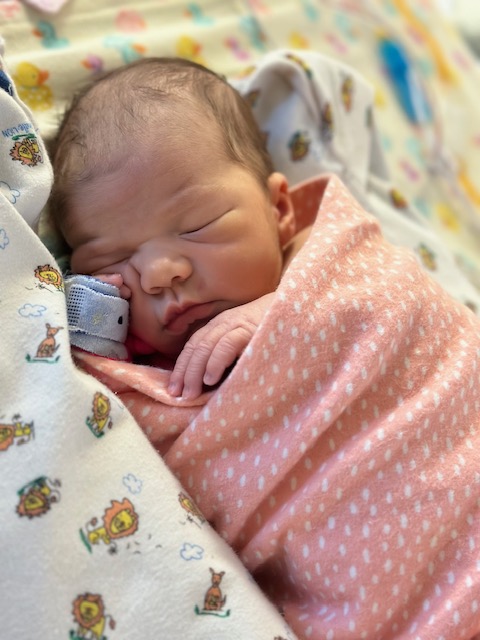
Lucy was born at 39 weeks in October 2024. Heidi was able to hold her new baby for a few minutes. Then, Lucy was seamlessly brought to Children’s Minnesota’s Level IV neonatal intensive care unit (NICU) for evaluation. After that, she was taken to the cardiovascular intensive care unit (CVICU). There, the medical team confirmed the severity of her congenital heart defect. Turns out, Lucy has three issues:
- Coarctation of the aorta: This means a part of Lucy’s main artery that carries blood from the heart to the body (the aorta) was too narrow, which makes it harder for blood to flow through.
- Hypoplastic aortic arch: This refers to the top part of the aorta (the arch) being underdeveloped or smaller than normal, which can also restrict blood flow. This condition most often happens in babies with coarctation of the aorta.
- Unicuspid aortic valve: Normally, the aortic valve has three flaps that open and close to let blood leave the heart. Lucy’s valve only had one flap, which can make it harder for blood to flow smoothly and may cause the heart to work harder.
Heart surgery and going home
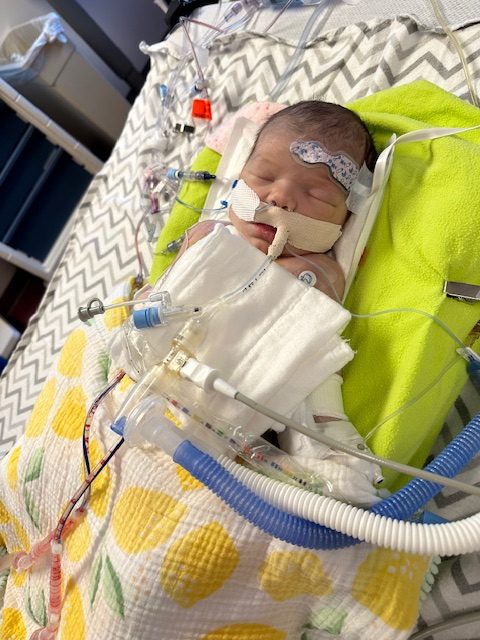
At just 5 days old, Lucy had open-heart surgery to correct the coarctation and fix her aortic arch. For Heidi, “Handing her over for surgery was the scariest moment, but I trusted the surgeons and knew they would do their best.”
The surgery was successful, and Lucy was recovering well. But a follow-up echo showed that her aortic valve was not working like it should. She went in for a balloon valvuloplasty at 2 weeks old performed by Marko Vezmar, MD, medical director of interventional cardiology. In the cardiac catheterization (cath) lab, Dr. Vezmar guided a tiny balloon into the narrow valve and inflated it, improving blood flow. Lucy was able to go home a week later.
Lucy the trailblazer
In June 2025, Lucy faced another challenge when her aorta began to narrow again. Through a Facebook group, Heidi heard about the Minima heart stent from Renata Medical. It’s the first heart stent specifically designed for babies approved by the Food and Drug Administration (FDA). She asked Dr. Aarsvold at Essentia about it, who brought it to Dr. Vezmar. He said Lucy would be an ideal candidate.
A few weeks later, she became the first baby in Minnesota to receive the Minima stent, and the procedure was a success.
“Typically, the standard of care was to use stents designed for adults in patients like Lucy. This stent, which is minimally invasive, can be gradually expanded as the child grows — all the way to adult size,” Dr. Vezmar describes.
It could be a couple years before Lucy returns to the cath lab to have the stent expanded.
“Lucy is our little trailblazer, setting the course for other babies. The stent has worked great,” says Heidi.

Looking ahead with hope
Today, Lucy is a happy, healthy baby who recently celebrated her first birthday. She’ll need another surgery in the future to fix her aortic valve. But for the family, every day is a gift.
“This journey has changed our perspective on life. Seeing Lucy recover and grow stronger each day is a blessing,” Heidi says. “The care we received at Children’s Minnesota was incredible. The medical team, the nurses, everyone was so supportive.”